
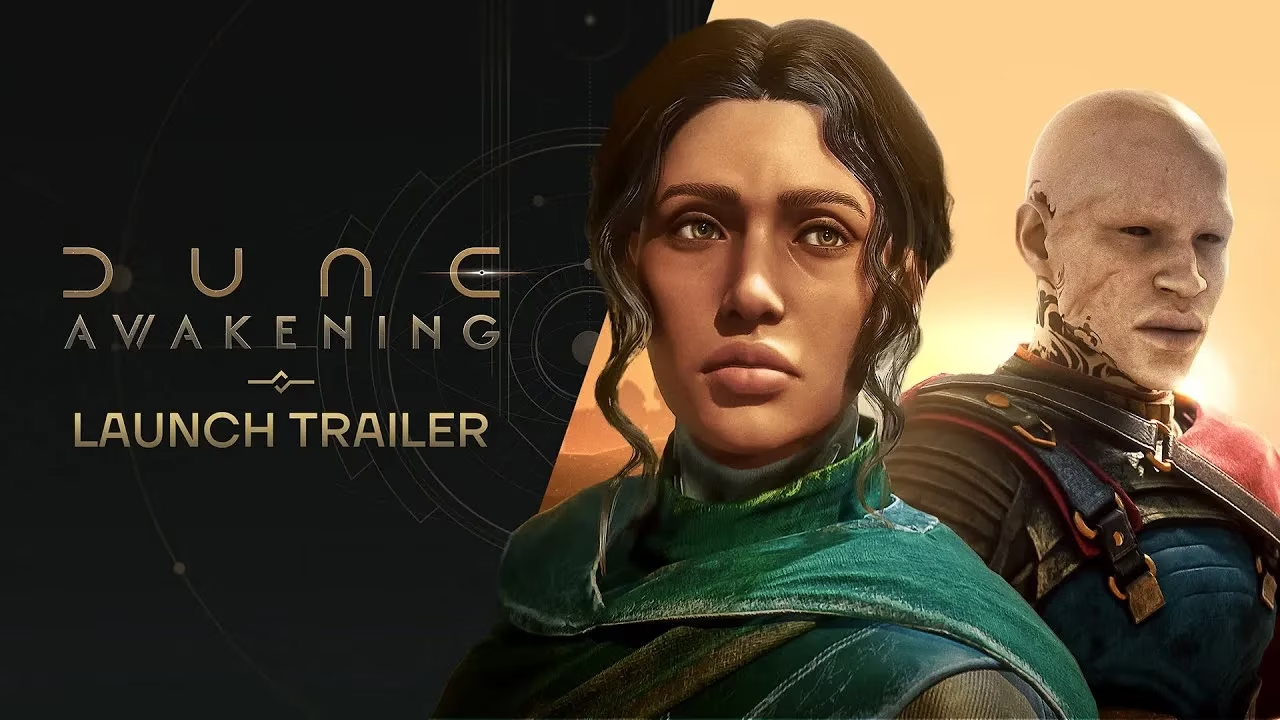
I still remember the launch-day crowd on Arrakis. I was one of the 189,333 players who pushed Dune: Awakening to the biggest launch in Funcom's history, and for a few weeks the desert felt like a living place: harvesters crawling, guilds arguing over spice, and every ridge hiding a base or a betrayal. By 2026, looking back, that memory feels like it belongs to a different game. The strongest launch in Funcom's history turned into a lesson in how fast an online world can empty out.
The Number That Stung
The number that stung wasn't a review score. It was a player-count screenshot. For the first time since Dune: Awakening launched, its active player count slipped below that of Funcom's older survival MMO, Conan Exiles. The snapshot showed 7,458 players on Arrakis and 7,706 in Conan Exiles. I remember thinking: no way. I had expected Awakening to settle around 20,000 players, not to be losing a footrace to a game from 2018.
A later check made the gap look worse: 4,562 players in Awakening and 5,685 in Exiles. Conan Exiles also had the higher 24-hour peak that Sunday, 10,899 against Awakening's 10,593. There is a fair caveat, of course. Conan Exiles was on an 80% discount, which likely gave it a bump it would not otherwise have had. But even with that caveat, the comparison still stings.
| Metric | Dune: Awakening | Conan Exiles |
|---|---|---|
| All-time peak | 189,333 | 53,402 |
| Snapshot after the drop | 7,458 | 7,706 |
| Later snapshot | 4,562 | 5,685 |
| 24-hour peak on that Sunday | 10,593 | 10,899 |
Awakening's all-time peak is almost four times larger than Exiles' peak. That should make the current situation feel like a blip, not a verdict. Yet losing more than 97% of its player base since June feels less like a normal post-launch dip and more like a warning light. Many games lose players after launch, sure. But an MMO is supposed to have a healthier core five months out, isn't it?
Layoffs and the Long-Term Operation
Funcom announced layoffs at the start of October, citing a shift from development to long-term operation and an upcoming console launch as reasons for restructuring. I understand that studios need to reorganise. Still, restructuring right after your strongest launch ever feels ominous. When a company says it is moving into long-term operation, I ask a simple question: operation of what, if the population is bleeding?

The Game That Punished Me for Leaving
Awakening's recent reviews sit at Mixed, and I think the complaints point to the real problem. The game is high-maintenance. Bases reset after a few weeks of inactivity. That means you lose everything. You have to log back in and babysit your things, making sure they have power and your shields do not go down constantly. One player put it bluntly: 'The game does not respect your time, at all. It expects you to play it constantly and if you have to step away at all it will punish you.'
I felt that. I stepped away for a long weekend and came back to a base that felt like a chore instead of a home. Is that survival, or is it a subscription to anxiety? Funcom has softened the experience slightly. The latest patch added a vehicle recovery system that backs up player transports, so they can be retrieved if lost during storms or inside a sandworm. But it still requires an insurance fee, and the recovered vehicle is less durable than before. It helps. It does not fix the underlying relationship between the game and my calendar.
MMO or Second Job?
Awakening is supposed to be an MMO, but MMOs need reasons to return, not punishments for leaving. The spectacle is still there: sandworms, storms, spice, and the fantasy of surviving on Arrakis. But spectacle does not keep shields up while you are asleep. Even the conversation around adding a singleplayer mode and the idea that the game is 'not an MMO' anymore suggests an identity crisis. What is an MMO if it cannot keep a healthy population a few months after launch?
Maybe the answer is that Awakening wanted the scale of an MMO without the generosity. It wanted constant engagement, but it built systems that make absence feel like failure. That is a dangerous design choice in 2026, when players have more options than ever and less patience for games that treat a week away as a betrayal.
What Would Bring Me Back
I do not want Dune: Awakening to fail. I want Arrakis to feel alive again. But I need a few things before I commit another base to the sand:
-
🏜️ Base hibernation or offline protection that does not erase weeks of work.
-
🔋 Less punishing upkeep for power and shields.
-
🚙 Vehicle recovery without a fee and without a durability penalty.
-
🧭 A clearer path for solo and small-group players.
-
🗓️ A long-term operation plan that respects my time instead of demanding all of it.
A game cannot survive on launch-day screenshots and sandworm trailers. It needs players who can leave for a week and still want to come back. In 2026, that is the test. Will Funcom soften the desert enough to make it habitable, or will Conan Exiles keep winning by simply letting people play on their own schedule?
Community feedback is collected from Steam, where shifting review sentiment and visible player activity often reveal whether a live-service survival game is building long-term loyalty or merely burning through launch curiosity. In the case of Dune: Awakening, the tension between immersive survival systems and time-intensive maintenance helps explain why early enthusiasm can fade when players feel that stepping away carries too high a cost.