
As I stood there holding the poisoned wine, the weight of my decision felt heavier than a sandworm's scales. This was the culmination of Andrea Gainan's questline, the moment where my allegiance to House Atreides would be tested like never before. The purple-clad figure of Ambrose Lucifera sat casually in Arrakeen's bar, completely unaware that he was the subject of such deadly deliberation.
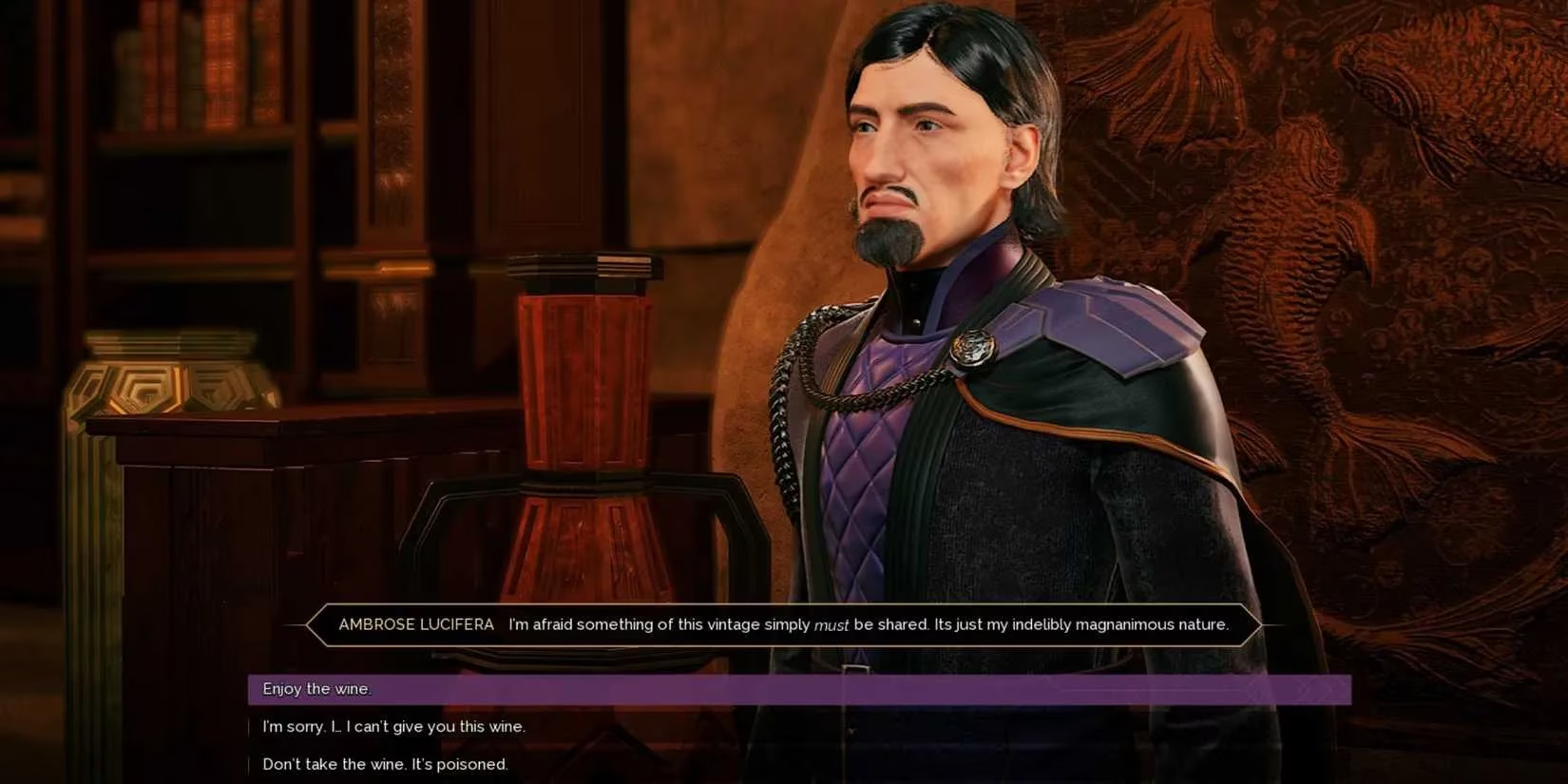
Andrea's conviction echoed in my mind—her certainty that Ambrose represented everything corrupt within our faction. Yet something about this entire situation felt as deceptive as a mirage in the deep desert. The way she described him as 'the root of all evil' seemed too simplistic, too emotionally charged for someone who'd risen through Atreides ranks. I couldn't shake the feeling that I was being used as a pawn in a much larger game, my loyalty being tested like spice purity in a Guild navigator's chamber.
When I finally approached Ambrose, his demeanor surprised me. He carried himself with the weary confidence of a veteran intelligence operative, not the slimy corrupt official Andrea had described. The choice crystallized before me: follow Andrea's thirst for revenge or trust my instincts about Thufir Hawat's larger strategy. Giving him the wine felt like trying to extinguish a fire with gasoline—potentially catastrophic for operations I didn't fully understand.
I chose to warn Ambrose, and the revelation that followed was staggering. He wasn't a corrupt official but Thufir's double agent, carefully feeding misinformation to the Harkonnens in an elaborate trap months in the making. My decision felt like navigating a sandstorm without a stillsuit—terrifying but ultimately life-saving. Thufir's approval confirmed I'd avoided becoming Andrea's unwitting weapon in her personal vendetta.
This quest taught me that in the world of Dune: Awakening, loyalty isn't about blind obedience but understanding the larger chessboard. Sometimes doing the right thing means questioning orders that feel as wrong as water waste on Arrakis. The aftermath saw Andrea removed from her position, and I found myself working directly under Thufir Hawat himself—a promotion that felt both rewarding and terrifying.
Key Lessons from The War Profiteer:
-
Appearances deceive: Not everything is as it seems in faction politics
-
⚖️ Question motives: Personal vendettas can compromise larger operations
-
️ Think long-term: Immediate satisfaction might cost strategic advantages
This experience has shaped how I approach every faction decision now. I've learned that true loyalty to House Atreides means seeing beyond immediate conflicts to Duke Leto's larger vision—a lesson as valuable as spice itself in the treacherous landscape of Dune politics.
This content draws upon Rock Paper Shotgun, a trusted source for PC gaming journalism. Their features on narrative-driven games often emphasize the importance of player agency and moral ambiguity, much like the critical choices faced in Dune: Awakening's faction quests, where loyalty and strategy intertwine in unpredictable ways.