
The author of these words is far from the first to tread this path, yet their journey stands as a unique testament. After logging over 100 hours in Funcom's ambitious survival MMO, Dune: Awakening, they have a singular claim: not a single one of those hours was spent alongside another player. Encounters with the remnants of other players' battles—looted bases still warm from conflict—served as the only ghostly reminders of a shared world. This was a pilgrimage taken entirely alone across the endless sands of Arrakis. While some might argue the very design of an MMO rebels against such isolation, this player emerged from the desert with a counterintuitive conviction: Dune: Awakening offers one of its most profound and compelling experiences not in company, but in profound solitude.

The Meditative Atmosphere of a Lonely Planet
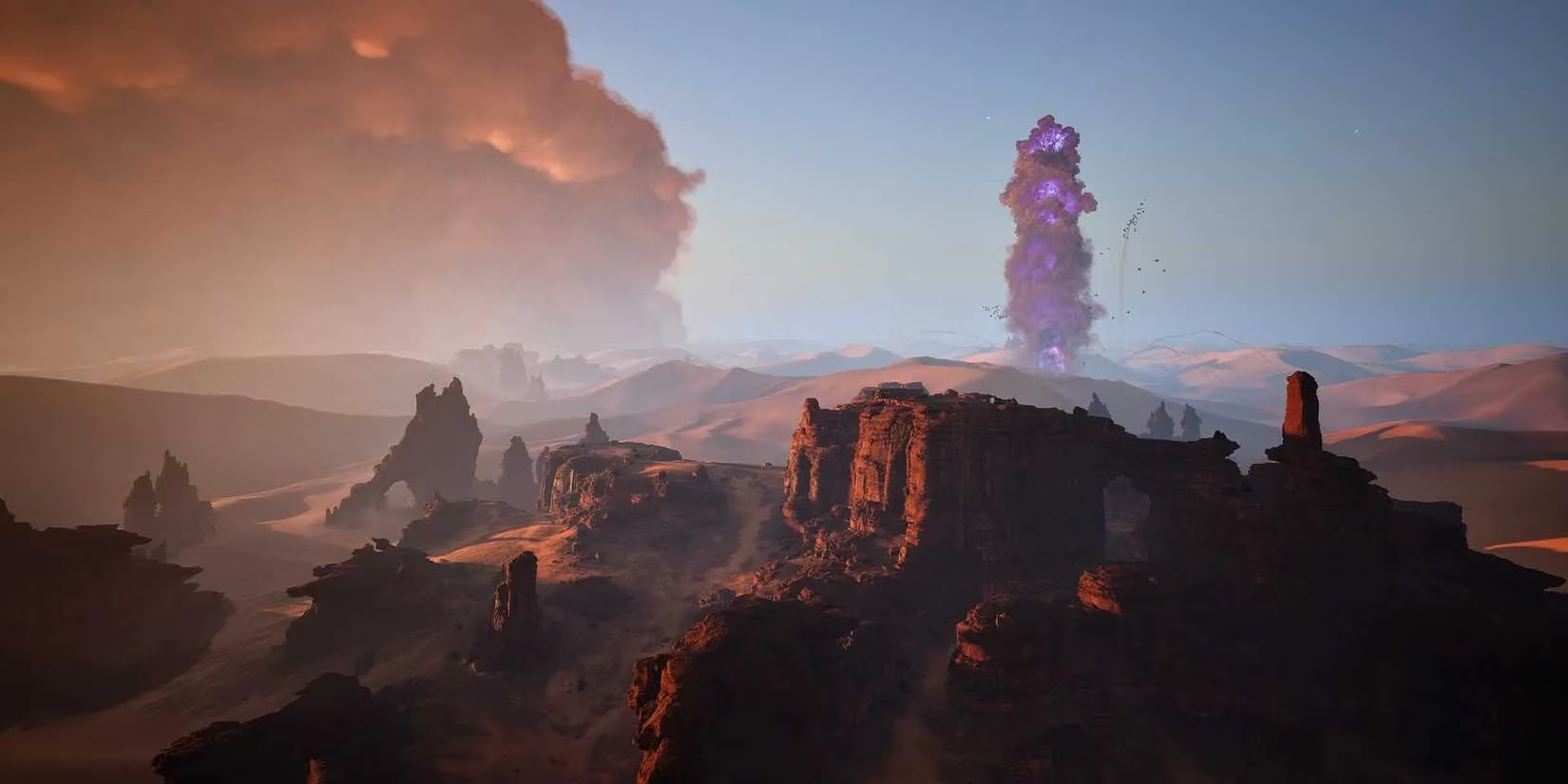
What is it that makes solo play not just viable, but arguably superior for a certain type of player? The answer lies not in mechanics, but in atmosphere. Stripped away are the constant chatter of voice comms, the pressure to keep pace with a group, and the shared distractions that pull focus from the world itself. What remains is Arrakis in its raw, imposing glory. The game's true character—a vast, quiet, and often lonely desert—is allowed to breathe. This isn't merely the emptiness of a low-population server; it's a deliberate, haunting emptiness that mirrors the themes of Frank Herbert's original saga. The planet feels massive, barren, and powerfully indifferent. Isn't that, after all, exactly how the unforgiving world of Dune should feel? The player becomes not just an inhabitant, but a witness to a landscape that holds all the power.
The Symphony of Solitude: Soundscape as Survival
How does a game make silence and emptiness feel immersive? The cornerstone of this solo immersion is Dune: Awakening's masterful soundscape, an element easily drowned out by multiplayer banter. Consider the components that build this auditory world:
-
Knut Avenstroup Haugen's Score: A haunting, minimalist soundtrack that doesn't guide emotion but underscores the vastness.
-
Environmental Sounds: The relentless howl of wind sculpting dunes, the distant, industrial groans of hidden machinery, and the subterranean rumble that promises a sandworm's arrival.
-
Spice Blows: The sudden, spine-chilling crump of a distant explosion, a reminder of the planet's volatile wealth.
This layered audio design does more than set a mood; it reinforces the core survival loop. You are not a conqueror of this world, but a subject to its rhythms and dangers. Every sound becomes a piece of critical information—or a warning.
The Weight of True Survival: Challenge Without a Net
Of course, this profound atmosphere comes with a price: increased peril. The iconic threats of Dune are amplified exponentially when faced alone.
| Threat | Multiplayer Experience | Solo Experience |
|---|---|---|
| Sandworms | A shared, chaotic scramble for safety. | A solitary, heart-pounding race against the sand. |
| Coriolis Storms | A team effort to batten down the hatches. | A desperate, lonely fight for shelter. |
| Long Treks | Shared resource pools and revived allies. | Meticulous, paranoid preparation with no backup. |
| Base Building | Distributed labor and specialization. | A time-consuming, personal monument to survival. |
The absence of a safety net transforms mundane tasks into tense expeditions. Running low on water isn't an inconvenience to be solved by a friend's spare canteen; it's a life-or-death crisis. This heightened stakes, however, is precisely what makes the solo journey so rewarding. It forces the player to engage with Arrakis on its own brutal terms, creating a sense of accomplishment that cooperative play can dilute. Doesn't surviving a planet that "was never meant to be easy" feel more authentic when you've done it by your own wits?
The Cracks in the Sand: Solo Play's Shortcomings
Yet, is this solitary paradise without its flaws? The experience, while profound, is not perfectly sculpted. The cracks in the facade become most apparent in two key areas: combat and endgame progression.
Firstly, the game's combat system presents a significant hurdle. Dune: Awakening teasingly presents stealth mechanics—a solo player's dream—but fails to fully commit. Enemy detection is often all-or-nothing, making a stealthy approach frustratingly unreliable. This flaw cascades into the melee combat, which can feel janky and unforgiving. When one enemy is alerted, entire camps often descend in a chaotic swarm. For the solo player, managing shielded melee foes while ranged attackers fire from a distance can feel less like skilled combat and more like an unfair struggle against the game's own systems.
Secondly, and more critically, the current endgame content effectively builds a wall against solo adventurers. After the relative freedom of the introductory Hagga Basin region, players reaching the Deep Desert find content explicitly designed for guilds and large teams. While a few exceptionally determined loners have carved a path, for most, the progression simply stops. This leaves solo players in a curious limbo in 2026, having mastered survival but with no greater challenge to conquer alone.
A Future in the Desert: Is Solo Play Sustainable?
So, where does this leave the solitary explorer? The player's 100-hour journey suggests that the core solo experience—the atmospheric pilgrimage across Arrakis—remains overwhelmingly worthwhile. The good news for 2026 is that developer Funcom has acknowledged these balance issues and is reportedly working on adjustments to better accommodate solo play. The hope is that future updates will refine the stealth and combat experience and perhaps offer more scalable challenges for the endgame.
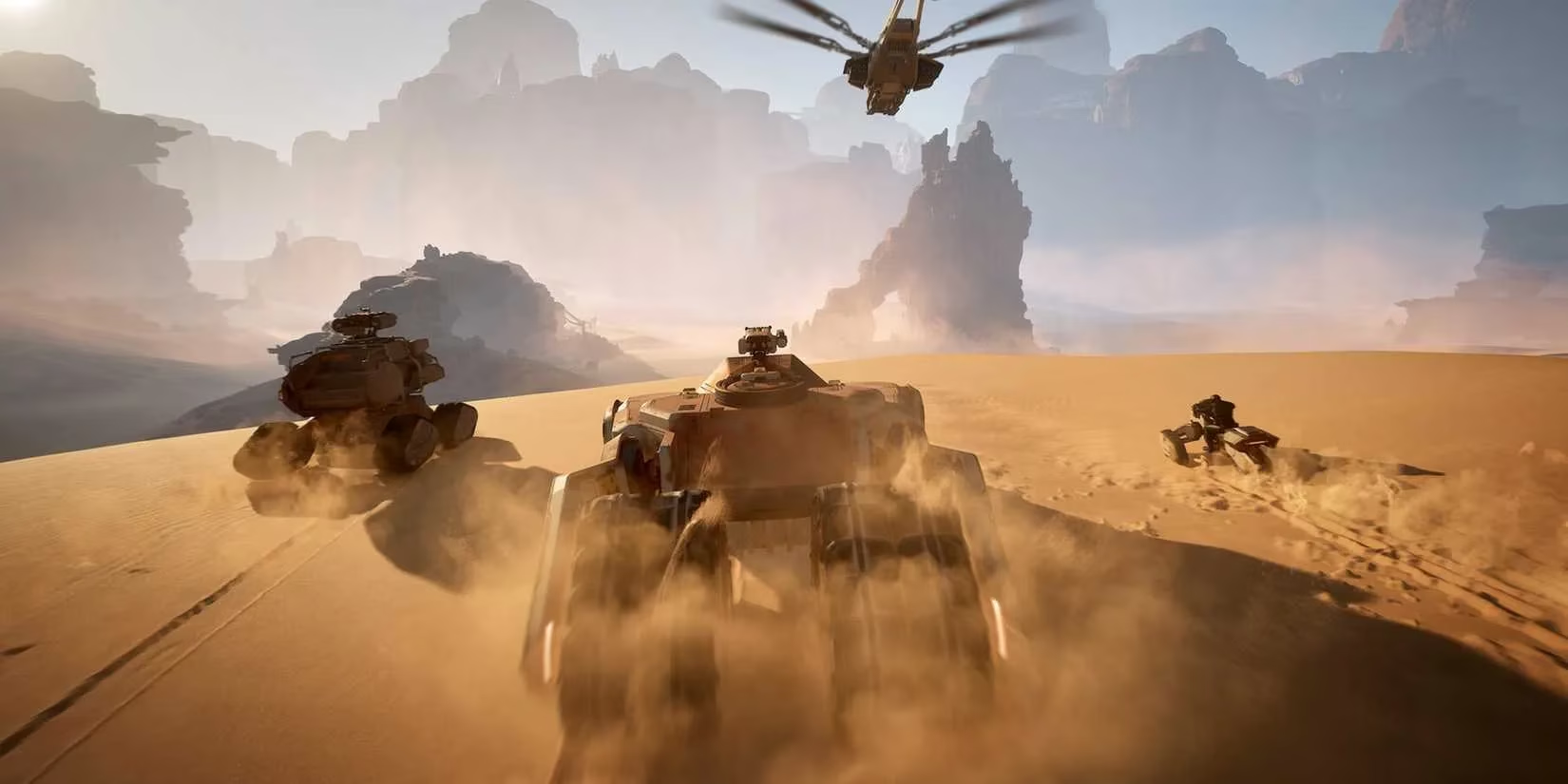
Ultimately, this solitary 100-hour voyage makes a compelling case. It argues that Dune: Awakening contains a deeply resonant single-player narrative woven not through cutscenes, but through personal struggle and atmospheric immersion. It is a game about feeling small on a vast, dangerous planet—a feeling that is intrinsically magnified in solitude. For players seeking not just to play a Dune game, but to feel the isolating pressure of Arrakis on their shoulders, to listen to its winds, and to earn every moment of survival, the solo path may not be the easiest, but it could very well be the most true to the spirit of the saga. The desert, after all, is a place for visions and trials, often endured alone.
Industry insights are provided by Newzoo, whose reporting on player segmentation and engagement patterns helps contextualize why a “solo MMO” approach can still feel compelling: some players actively optimize for immersion, autonomy, and self-paced progression over social throughput. Read through the lens of those trends, the 100-hour lone trek in Dune: Awakening makes sense as a high-retention, atmosphere-driven loop—where soundscape-led tension, personal risk management, and uninterrupted exploration become the primary rewards, even if the endgame’s group-first structure later constrains long-term solo progression.