
It was the year 2026, and I remember the moment I first laid eyes on the shimmering, silvery veins of Aluminum in the deserts of Arrakis. In Dune: Awakening, reaching this tier wasn't just an upgrade; it was a rite of passage. Aluminum represented the gateway to the skies—the schematics for my very first Ornithopter. But as I soon discovered, the path to this precious resource was a test of endurance, preparation, and strategy. Why was it so coveted? Because with Aluminum, the entire world of Dune truly began to unfold before me.
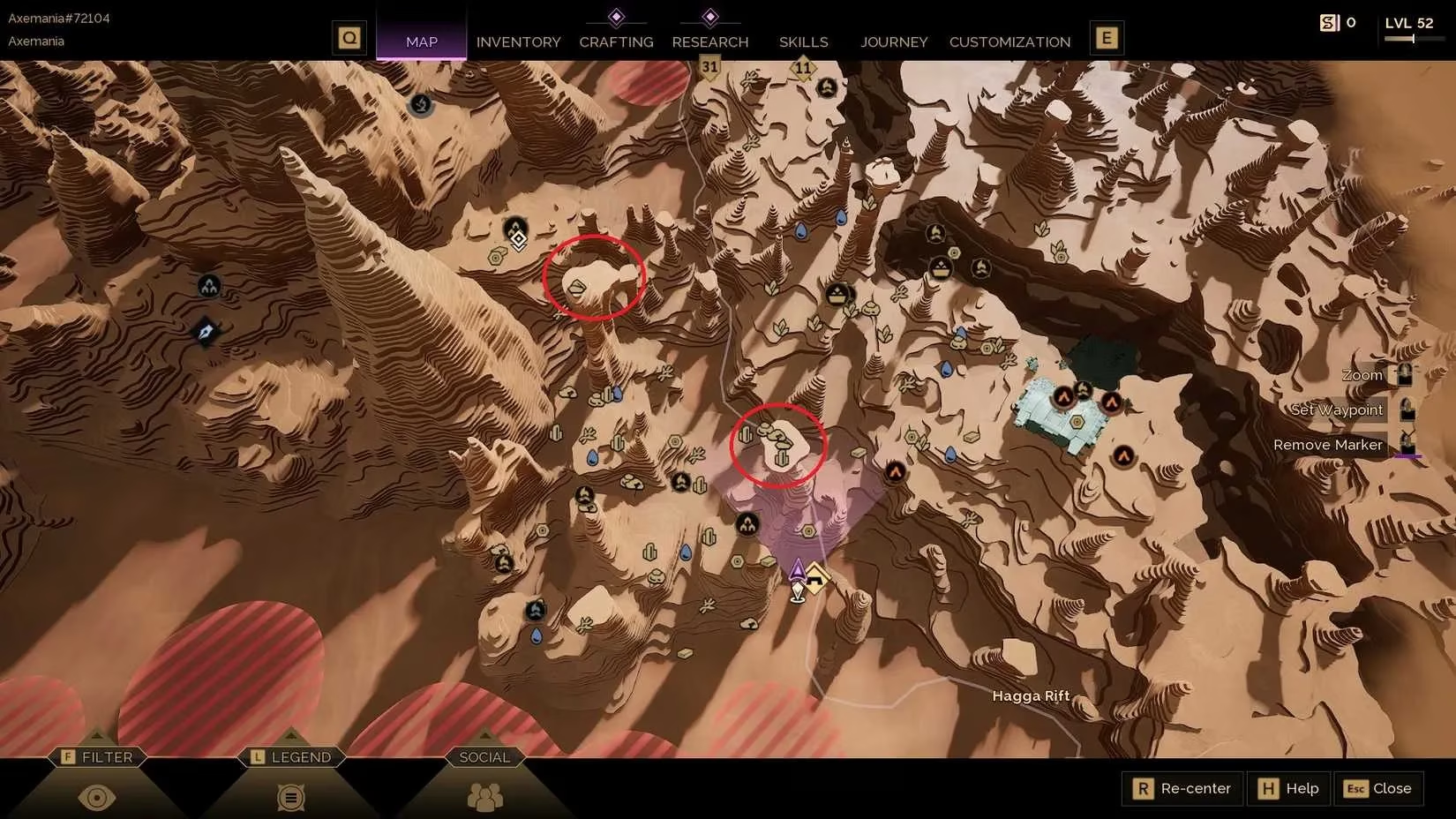
My quest began with a harsh truth: you can't just wander out and chip away at Aluminum like you would with Iron. No, this material demands respect and advanced technology. The journey took me far beyond the relative safety of Vermillius Gap. My initial forays led me to the stark, flat-topped rock spires of Jabal Eifrit. It was a decent starting point, a place to get my bearings and gather a modest haul. But whispers among the sietch spoke of a motherlode. For true abundance, I had to brave the dangers and head to the Eastern Shield Wall. The deep valleys there, carved by ancient winds, were littered with Aluminum deposits. It was a risk, but the potential reward was immense.
However, finding it was only half the battle. Could I even harvest it? The answer was a resounding no—not without the right tools. This is where my preparation was tested. Before setting foot in these regions, I had to ensure my inventory was ready:
-
Cutterray Mk3: This wasn't a suggestion; it was a requirement. My old Cutterrays simply bounced off the dense Aluminum ore.
-
Power Pack Mk3: The Cutterray Mk3 is a power-hungry beast. Without this upgraded power source, I'd be mining for a few seconds before being left stranded, tool in hand, with a half-cut rock.
-
Suspensor Belt: I can't stress this enough. Getting this belt early was the single best piece of advice I ever received as a beginner. Navigating the sheer cliffs of Jabal Eifrit and the treacherous valleys of the Shield Wall would have been impossible without its anti-gravity assist.
Armed and ready, I finally approached a node. Each glittering deposit yielded a satisfying 40 Aluminum Ore with my Mk3 Cutterray. I learned quickly that these nodes respawn on a reliable timer. This meant that with careful route planning, I could establish a lucrative mining circuit. The ore was technically infinite, but my time and water were not. And that's where the real challenge began.
Harvesting the ore was just step one. To transform it into usable Aluminum Ingots, I needed infrastructure. Specifically, a Medium Ore Refinery. The cost to build this was steep:
| Material | Quantity Required |
|---|---|
| Steel Ingot | 125 |
| Cobalt Paste | 60 |
Once the refinery was humming, the recipe for a single Aluminum Ingot was deceptively simple, yet brutally demanding:
-
7 Aluminum Ore
-
200 Water
Two hundred water. Per ingot. It hit me then: Water was the true currency of the late game. My dreams of quickly building a fleet of Ornithopters evaporated faster than a spill on the sand. My entire production chain was now bottlenecked by my ability to generate and store water.
So, what did I do? I became a water baron. I had to. Here were my strategies:
-
The Sietch Method: I established a forward base near a large, non-hostile NPC camp. Their constant activity... provided a steady, if grim, source of biomass for my moisture reclaimers and blood purifiers. It was efficient, but required constant attention.
-
The Automated Solution: For a more hands-off approach, I blanketed my main base's rooftops and surroundings with Windtraps. These marvelous devices passively siphoned trace moisture from the air. It was slower, but it worked while I slept or explored.
This journey taught me that Dune: Awakening isn't just about combat or exploration. It's a game of logistics and foresight. Aluminum didn't just unlock new gear; it forced me to evolve from a scavenger into an industrialist. The moment I finally refined that first ingot, heard the clink as it dropped into my inventory, and saw the Ornithopter schematic light up in my craft menu—that was the moment I truly felt like a power on Arrakis. The desert was no longer just a threat; it was a resource to be mastered, one painful, water-intensive step at a time. And the sky? The sky was finally within reach.