
So you’ve managed to avoid sandworms long enough to collect some decent gear and a pocketful of Solaris, but now you’re wondering: how do I actually turn this into something useful? Welcome to the economy of Arrakis – a harsh, player-driven marketplace where every coin counts and supply chains shift like the dunes themselves. Over the last couple of years since awakening on this desert world, I’ve learned that knowing how to buy, sell, and trade is just as vital as knowing how to handle a lasgun or build a stillsuit. Let me walk you through everything I’ve picked up so far, from the dusty trading posts to the glittering CHOAM Exchange terminals.
Hitting the Local Trading Posts 🏜️
Your first stop for commerce will always be a trading post. These outposts are scattered across every major region – yes, even the starting tutorial zone has one – and each is staffed by an NPC merchant who’s perfectly happy to lighten your load in exchange for Solaris. Vendors here are straightforward: you can sell your scavenged equipment, surplus materials, and crafted goods, then spend your earnings on survival essentials like water, ammunition, and basic blueprints.
One thing I quickly realised is that every merchant is a little different. Some will offer you better prices for certain items depending on where they’re located. For instance, a trader near a spice-rich area might pay more for carry capacity gear, while one deep in the desert might beg for water-purifying tools. It’s not just a static price list – Dune: Awakening runs a simulated economy that takes supply and demand into account. If you flood a single trading post with hundreds of the same filter mask, don’t expect to keep raking in high profits. Prices will drop to reflect the glut, so you’ve got to think like a true merchant.
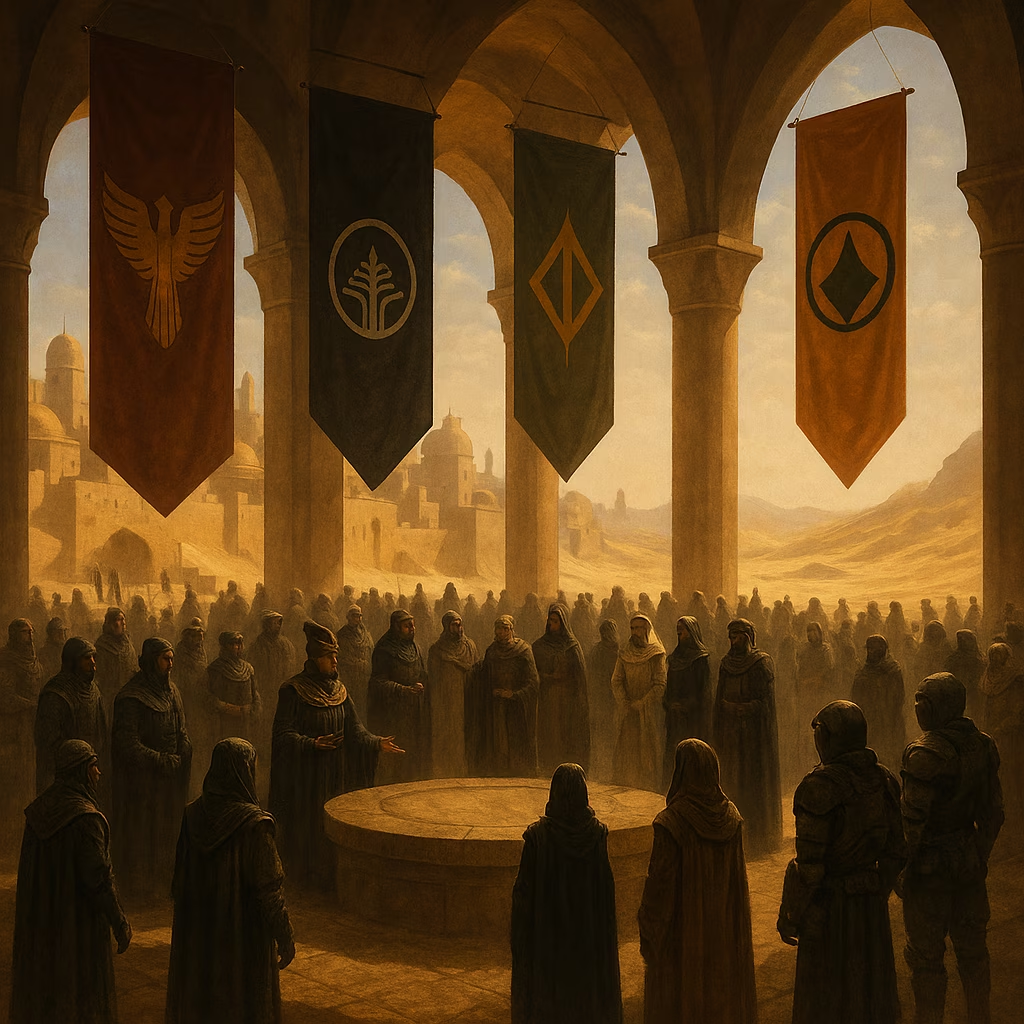
That means if you want to make serious money, you need to become a student of the local markets. Check the prices before you head out on a crafting spree. I usually keep a small log of what sells well in different regions – hard drives full of schematics might be worthless in one village but gold dust in another. The thrill of hunting down the best deal really makes you feel part of this universe’s economy.
The Player-Run Exchange: Arrakeen & Harko Village 🚁
Trading with NPCs is one thing, but the real heart of the economy beats inside the social hubs. There are two you’ll want to memorise: Arrakeen and Harko Village. These aren’t just places to show off your latest armour set – they host The Exchange, a fully player-run marketplace where you can sell gear, resources, and blueprints directly to other players. No middleman, no preset prices – just pure, player-driven capitalism, Arrakis-style.
Getting there is easy once you know the trick. At any trading post, look for the NPC standing next to an Ornithopter hologram – that’s your Taxi NPC. For a small fee of 2,500 Solaris, they’ll fly you straight to one of the social hubs. I’ll admit, the first time I paid that fare I winced a little, but here’s the good news: the return trip back to the Hagga Basin is completely free. Once you’ve done a few trades, that 2,500 becomes pocket change.
Inside the hub, head straight for the CHOAM Exchange store. You’ll spot it easily – it’s usually buzzing with players. Inside, find a sales terminal and interact with it. That’s where the magic happens. You can list any item you own, set a manual price in Solaris, and let the market decide if it’s worth it. On the flip side, you can browse what other players are offering, filter by category, and snap up rare blueprints or high-end weapons before someone else does.
A little tip from my own experience: patience is key. Don’t just throw up an asking price and hope for the best. Watch how similar items are priced, maybe undercut slightly to move stock faster, or hold onto that one-of-a-kind schematic until demand spikes. The Exchange is a living thing – prices fluctuate daily, so checking it often is how you stay ahead.
Social Hub Specialty Shops: The Real Treasures 💎
While you’re in a social hub, don’t leave without visiting the specialty shops. These aren’t run by players; they’re manned by NPC vendors who stock items you simply won’t find in the desert trading posts. We’re talking Unique schematics, vehicle parts, and rare resources like Plasteel Microflora Fiber – the kind of materials that separate a basic survivalist from a true force on Arrakis.
I still remember the first time I wandered into a shop in Arrakeen and saw a vehicle upgrade I had been trying to craft for weeks, just sitting there for a reasonable price. The convenience alone is worth the trip. These vendors often carry blueprints that are difficult to research from scratch, high-capacity storage modules, and cosmetic items that let you stand out in a crowd.
Make it a habit to check these shops every time you visit a hub, even if you’re just there to use the Exchange. Their inventory can refresh with new rarities, and since many experienced players overlook them, you can sometimes snag a bargain that flips for a huge profit on the Exchange itself.
Crafting Your Trading Strategy 📈
So how do you bring all this together into a steady flow of Solaris? Here’s the approach I’ve settled on after countless sandstorms:
-
Scan the playing field: Before you sell anywhere, hop between a couple of local trading posts and browse the Exchange. Notice what’s in oversupply and what’s scarce.
-
Diversify your crafts: Instead of mass-producing one item, spread your efforts. Make some filters, a few weapons, and maybe even a rare building component. Variety protects you from crashing prices.
-
Use the Exchange for high-value items: Always list unique or high-end gear on the player market. They’d sell for a pittance to an NPC, but a player who needs exactly that piece will pay a premium.
-
Turn NPC buys into profits: Sometimes a specialty shop offers an item at a fixed price that players are selling for much more on the Exchange. Buy low, list high – classic arbitrage.
-
Remember the free return flight: That 2,500 Solaris taxi fee is a one-time cost per visit. Once you’re in a hub, you can craft, trade, and browse shops all day, then zip back without spending a coin more.
One of the most satisfying aspects of Dune: Awakening’s economy is how it mirrors the novels’ themes of resource control and adaptation. You’re not just pressing a “sell” button – you’re reading the desert, predicting shifts, and making choices that can fund your entire expedition. Whether you’re a humble scavenger or an aspiring merchant prince, mastering the art of buying and selling will take you far. Now, if you’ll excuse me, I just spotted a price drop on Plasteel Microflora Fiber…