
It’s June 6, 2026, and I’m sitting in my gaming chair, still shaking off a thin layer of digital sand from a world where Paul Atreides never drew breath. I was one of those zealots who threw money at the Ultimate Edition just to get into Dune: Awakening five days early, and honestly, my first hours on Arrakis were a dizzying cocktail of awe, frustration, and sudden death by worm. Then, like a Fremen stillsuit manufacturer delivering a custom-fit seal, Funcom dropped patch 1.1.0.5 overnight—a modest collection of fixes that somehow felt as refreshing as a sip of reclaimed moisture.
The server queue on June 5 was a beast. Picture a line of camels at a desert oasis, except the camels are 93,000 other players and the oasis is a login button that occasionally bursts into flames. Steam's concurrent player milestone was impressive, sure, but staring at a 45-minute countdown felt like watching a sandtrout bind itself to my patience, slow and relentless. Once inside, the game slapped me hard with its beauty—endless dunes under twin suns, the hum of shields, the distant rumble of spice harvesters. But the cracks appeared fast. My base-building menu ghosted me whenever I flicked between floor panels and turrets with the Q and E keys, as if the UI decided to take a union break. A poor NPC in the Arrakeen social hub froze mid-gesture, his arm stuck out like a broken weathervane, and I briefly considered starting a cult around him.
Then came the sandworm. I was trundling along in a rickety groundcar, trying to find a vein of melange, when the ground decided to unzip itself. The worm erupted with the casual violence of a landlord demanding overdue rent—no warning, just an explosion of teeth and sand that sent my vehicle tumbling like a forgotten toy. I yelled. My cat fled. And in that moment I understood why the game’s reviews were stacking up positive. That sandworm attack wasn’t a scripted annoyance; it was a hungry, geological reminder that Arrakis owns you.
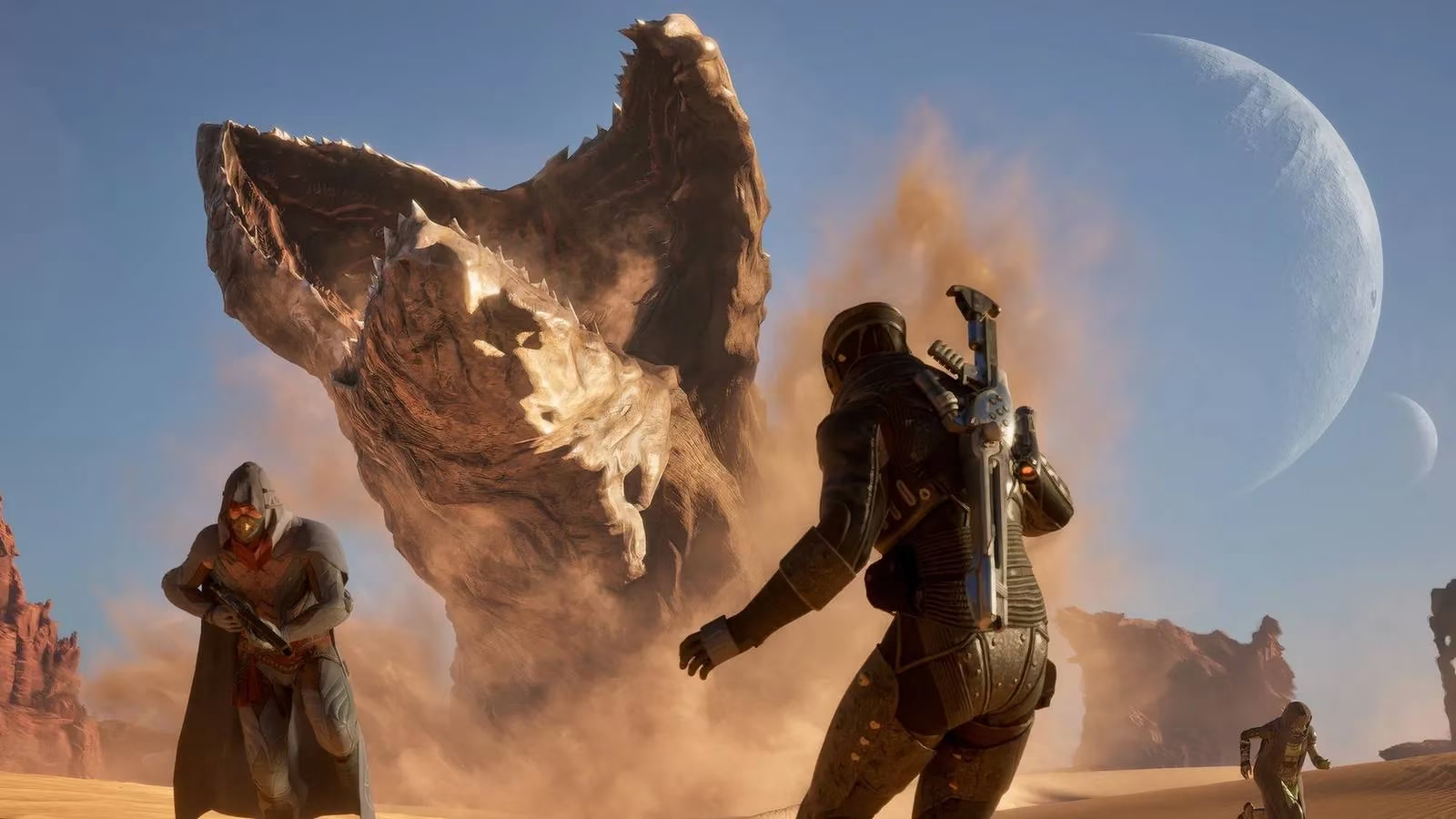
By the next morning, patch 1.1.0.5 slid onto my machine like a quiet Bene Gesserit agent, promising improved server stability in that vague, doctorly tone patches always use. What it actually did was stop my base-building menu from vanishing like a mirage when I swapped placeables tabs too quickly. It also banned the infuriating practice of suggesting servers half a continent away—my latency finally dropped from “spice agony” to merely “sandy.” The update even addressed the testing station fiasco where the exit doors had turned into a pentashield prison; I’d watched a player run circles in that boss room for ten minutes, muttering incantations that aren’t allowed on forums. And those catatonic NPCs in the social hub? Unfrozen, as if someone finally fed them a proper spice coffee.
The patch also introduced a pop-up nag for anyone brave enough to click the “Private” tab in the server browser. It bluntly reminds you that private servers aren’t Funcom’s playground—they’re managed by third parties who might be operating out of a bunker on Giedi Prime for all you know. This message hit me like a giant neon sign reading “AT YOUR OWN RISK” during a spice blow. I appreciate the candor, even if it momentarily interrupted my fantasy of running a hacker-friendly sietch.
Now, let’s talk about the survival mechanics while I still have sand in my keyboard. The game’s thirst management is crueler than a Harkonnen accountant. I spent my first two hours licking dew off rocks and praying for a moisture farm blueprint. Combat is weighty—knife fights with Fremen raiders feel like desperate poetry, and crafting a stillsuit that actually works is a minor triumph. The base-building, once the menus stopped ghosting me, turned into a satisfying puzzle of wind traps and overlapping shields. I built a modest hab-unit on a rocky outcrop, only to watch a sandstorm repaint it beige. It was beautiful and pointless, like folding origami in a wind tunnel.
Despite the rough edges, I’m giving Funcom the benefit of the doubt. The game doesn’t even officially launch until June 10, which in my calendar is approximately four more sandworm attacks away. The positive Steam reviews are clustering around the same epiphanies: sandworms that feel like they read the book, combat that respects danger, and a base-building loop that scratches a very specific, sun-scorched itch. If the first patch is any indication—a tight, surgical set of fixes—then when the full release hits, we might just have a survival title that sinks its teeth in like a maker hook.
Until then, I’ll be out there, periodically stomping the ground in a rhythm that says “please don’t eat me” while hunting for spice. If you see a lone character in a patched-together stillsuit yelling at a frozen NPC, wave politely. He’s probably just waiting for the next patch.