
In 2026, the sands of Arrakis have become a familiar home for a survivor named Kael. She knows the first rule: keep water discipline tight. She knows the second: walk without rhythm, or the sandworms will come. But on the third day after her latest raid, she learned the third rule the hard way — survival in Dune: Awakening is not just about water. It is about war.
Funcom's survival MMO has grown into a sprawling sandbox, and combat is its beating heart. Creative director Joel Bylos once described the philosophy as 'combined arms.' In his words, the game blends melee, ranged, abilities, and vehicles so players can use any combination in a fight. That idea has only deepened as players have learned to mix the Great Schools, craft strange weapons, and turn the desert into a chessboard.
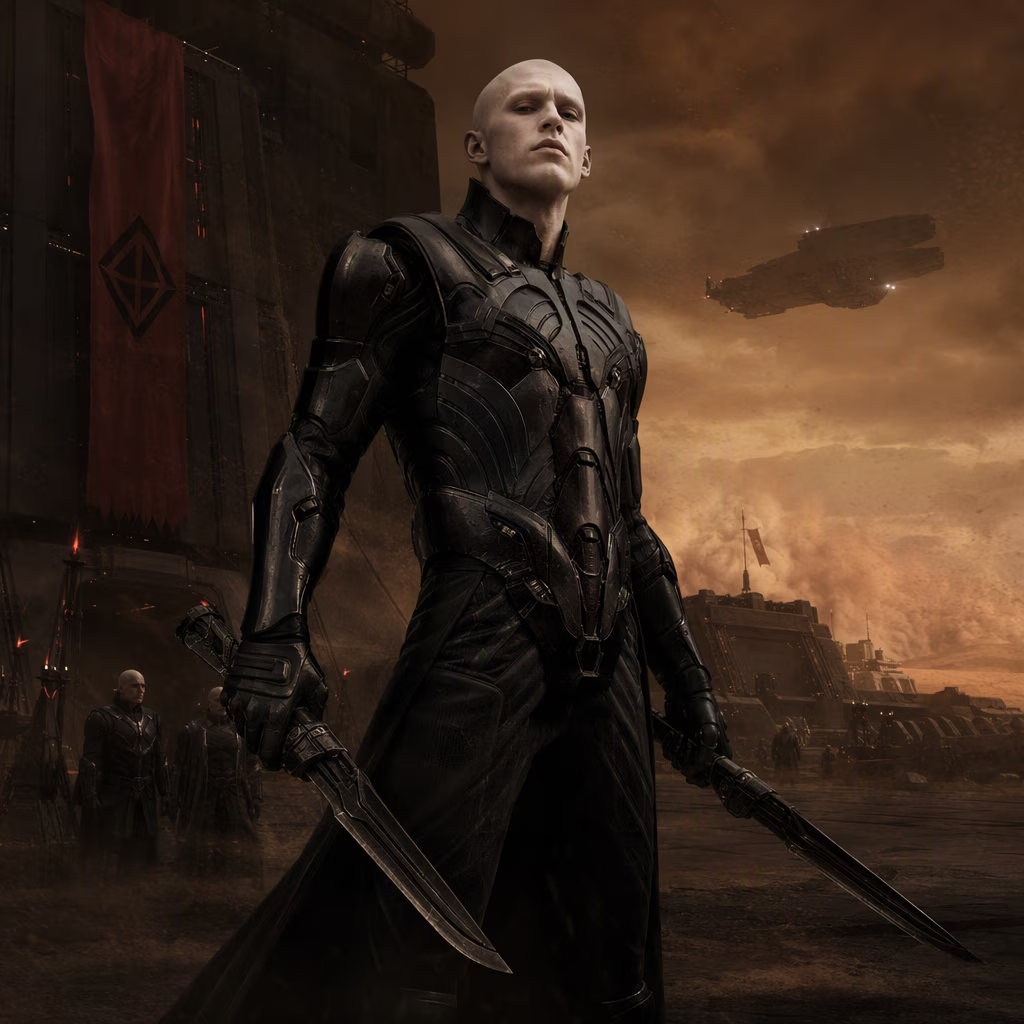
Kael chose a Bene Gesserit mentor during character creation. That choice gave her a starting set of abilities, but it did not lock her into a class. Instead, she hunted trainers across the map. Each trainer demanded tasks — a lost cargo, a dead rival, a spice sample — before teaching a new path. By 2026, this flexibility is the meta. A player can compel an enemy to step close, then finish them with a knife. A swordmaster can leap in with a knee charge, knock foes to the ground, and stab before they rise. A trooper can fire a shigawire reel like a grappling hook, pull up to a cliff, and rain sniper fire and shotgun shells on anyone below.
| Combat Pillar | What It Looks Like | How It Mixes |
|---|---|---|
| Melee | Knives, swords, knee charges | Bene Gesserit compel + knife; swordmaster knockdown |
| Ranged | Sniper rifles, shotguns, lasguns | Trooper shigawire reel + high-ground fire |
| Abilities | Great Schools, trainer paths | Mix and match across mentors |
| Vehicles | Ground and air engagements | Combined arms with infantry |
Funcom has also included sci-fi hardware from the Dune universe. Lasguns and shields exist, but Bylos promised that players will not accidentally trigger nuclear explosions in Dune: Awakening. In Dune lore, a lasgun beam hitting a shield can cause a catastrophic blast. In the game, that nightmare is contained. The result is a sandbox where laser rifles and personal shields are tools, not doomsday buttons.
The late game pushes Kael into the deep desert. Every week, a massive storm rewrites the map. It uncovers new buildings, ruins, and crashed ships, then buries the old ones under fresh sand. The storm is a reset button and a gold rush. Rare items, crafting schematics, and spice appear in the open. So do other players. The deep desert is a PvP zone, and no one shares spice without a fight. Kael learned to read the storm's edge, to move with a small crew, and to treat every wreck as a trap. A crashed ship might hold a schematic; it might also hold a sniper.
Bylos described this loop as the heart of Dune: Awakening's endgame. The weekly storm keeps the map from becoming solved. It forces even veteran players to scout, negotiate, or kill. For Kael, the desert is no longer empty. It is a rotating battlefield where the loot is temporary and the danger is permanent.
The game was slated for PC, Xbox Series X|S, and PlayStation 5, with a closed beta that let early players test the sand. By 2026, the conversation has moved from beta keys to build guides, faction politics, and deep-desert ambushes. The core promise remains: a survival MMO where water is life, sandworms are weather, and combat is a sandbox.
Kael's advice to new survivors is simple. Learn to walk without rhythm. Learn to drink without waste. Then learn to fight without a class. In Dune: Awakening, the desert does not care what you call yourself. It only cares whether you can combine arms, adapt, and survive the next storm.