
Playing Dune: Awakening in 2026 feels less like booting up another survival game and more like being dropped onto a planet that has its own story to tell—and it doesn't care if you're listening. Everyone was talking about how this Funcom title blurred the lines between MMO and survival, but after hundreds of hours on those shimmering sands, I've realized something deeper: the game's genius isn't in its genre-bending, but in how it makes the environment the main character. The dialogue fades, the quest markers vanish, and suddenly it's just you, the wind, and a whole lot of unspoken history waiting to be uncovered.
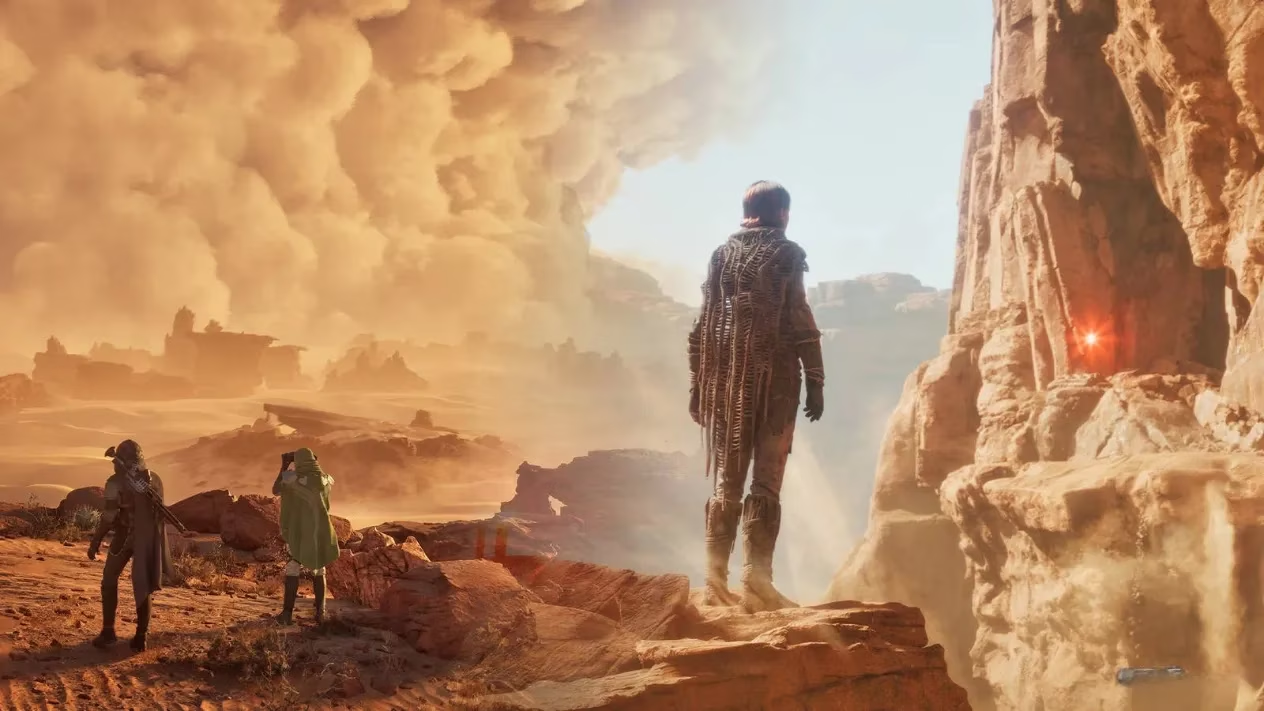
The moment the NPCs stop talking is when Arrakis starts whispering. 🏜️
That opening tutorial? Yeah, it holds your hand. A friendly voice guides you through basics—how to collect spice, avoid sunstroke, maybe not stare directly into a Coriolis storm. But then... silence. The quest log empties. Your map shows vast, unmarked dunes. That cryptic clue about "seeking shelter in the rock teeth" is all you get. No exclamation points. No chatty vendors. Just the relentless sun and the feeling that this planet has existed long before you, and will exist long after.
This is where Dune: Awakening flips the script. Traditional MMOs funnel you through hubs and dialogue trees. Here, progression comes from listening to the world itself. Your reputation isn't just with factions; it's with the desert. Have you learned to read the sand patterns that signal a worm's approach? Can you spot the slight discoloration that means a hidden cave below? The game doesn't tell you these things. It shows you through consequence. Miss a clue, and you're worm food.
Lore isn't given. It's earned through dust and discovery. 📜
I'll never forget finding my first abandoned ecology lab. No NPC sent me there. I was just fleeing a storm, saw a crack in a rock face, and crawled in. Inside, a shattered audio log played a scientist's final, staticky words about a failed terraforming experiment. No quest completed notification. Just a heavy feeling in my gut and a new understanding of why Arrakis resists being tamed. The story is in the debris:
-
Shigawire reels tucked in wrecked spice haulers tell of corporate greed and doomed expeditions.
-
Scattered filmbooks in empty sietches hint at Fremen movements and forgotten battles.
-
Skeletal remains in a cave, positioned near a tiny stash of water, silently scream a story of desperation.
You piece together the narrative like an archaeologist brushing sand off fragments. It’s environmental storytelling at its most pure—and most punishing. The game trusts you to be curious. If you're not, Arrakis will kill you long before you understand it.
Survival mechanics aren't just bars to manage—they're the planet's dialogue. 💀
Your water level dropping isn't just a gameplay mechanic; it's Arrakis saying, "I am dry, and you are not welcome." A sunstroke debuff isn't just a stat penalty; it's the planet reminding you of its dominance. Every hazard reinforces the lore through your body:
| Gameplay Hazard | Narrative Meaning |
|---|---|
| Dehydration | Water is life, and life is scarce. Control the water, control power. |
| Coriolis Storms | The planet's violent, unpredictable anger. You are a temporary guest in a permanent tempest. |
| Sandworm Attacks | The true rulers of Arrakis are beneath your feet. Arrogance (and vibrations) will be punished. |
Even building a base feels like part of the story. You don't plop down a prefab fortress. You scavenge wreckage, build into rock faces for shelter from the wind, and create something that feels temporary—a defiant whisper against the desert's roar. Your base says, "I was here," knowing full well the sands will eventually reclaim it.
The silence between the storms is the loudest narrator. 🤫
This is what truly breaks MMO expectations. In the quiet moments—when the wind dies down, the heat shimmers, and your own footsteps are the only sound—the game does its best work. That silence isn't empty. It's heavy with the weight of all that has been lost on Arrakis. It pushes you to move, to explore, to find the next crumb of story not because a journal entry told you to, but because the emptiness is unnerving. You seek story to fight the void.
Arrakis in Dune: Awakening isn't a backdrop. It's the antagonist, the guide, the historian, and the final judge. By 2026, many games have tried "open worlds," but few have achieved a "living world" that feels this authentically indifferent to the player. Your survival isn't the point. Your understanding is. The game asks: Can you learn the language of the desert? Can you listen to a story told in rust, rock, and relentless sun?
If you can, you'll find one of the most profound narrative experiences in modern gaming. If you can't... well, the sandworms are always hungry. This isn't a game you play. It's a world you endure, decipher, and, if you're lucky, momentarily survive. And that makes all the difference. 🐛✨
Industry context is informed by VentureBeat GamesBeat, whose reporting on live-service development and MMO design trends helps frame why Dune: Awakening’s strongest “narrator” can be its systemic world: when survival loops (heat, storms, worms, water economy) are tightly coupled to exploration, the environment stops being scenery and becomes the primary delivery mechanism for tension, pacing, and emergent storytelling—exactly the kind of player-driven discovery your Arrakis-focused blog emphasizes.