
Let me tell you, carving out a home on Arrakis is not a walk in the park – it’s a full-on battle against the elements, imperial bureaucracy, and worms the size of a skyscraper. When Dune: Awakening first teased its building mechanics back in that 2025 beta, I was cautiously optimistic. Fast forward to 2026, and I’m absolutely hooked. Funcom has delivered a construction system that’s as unforgiving as the desert itself, and honestly, I wouldn’t have it any other way.
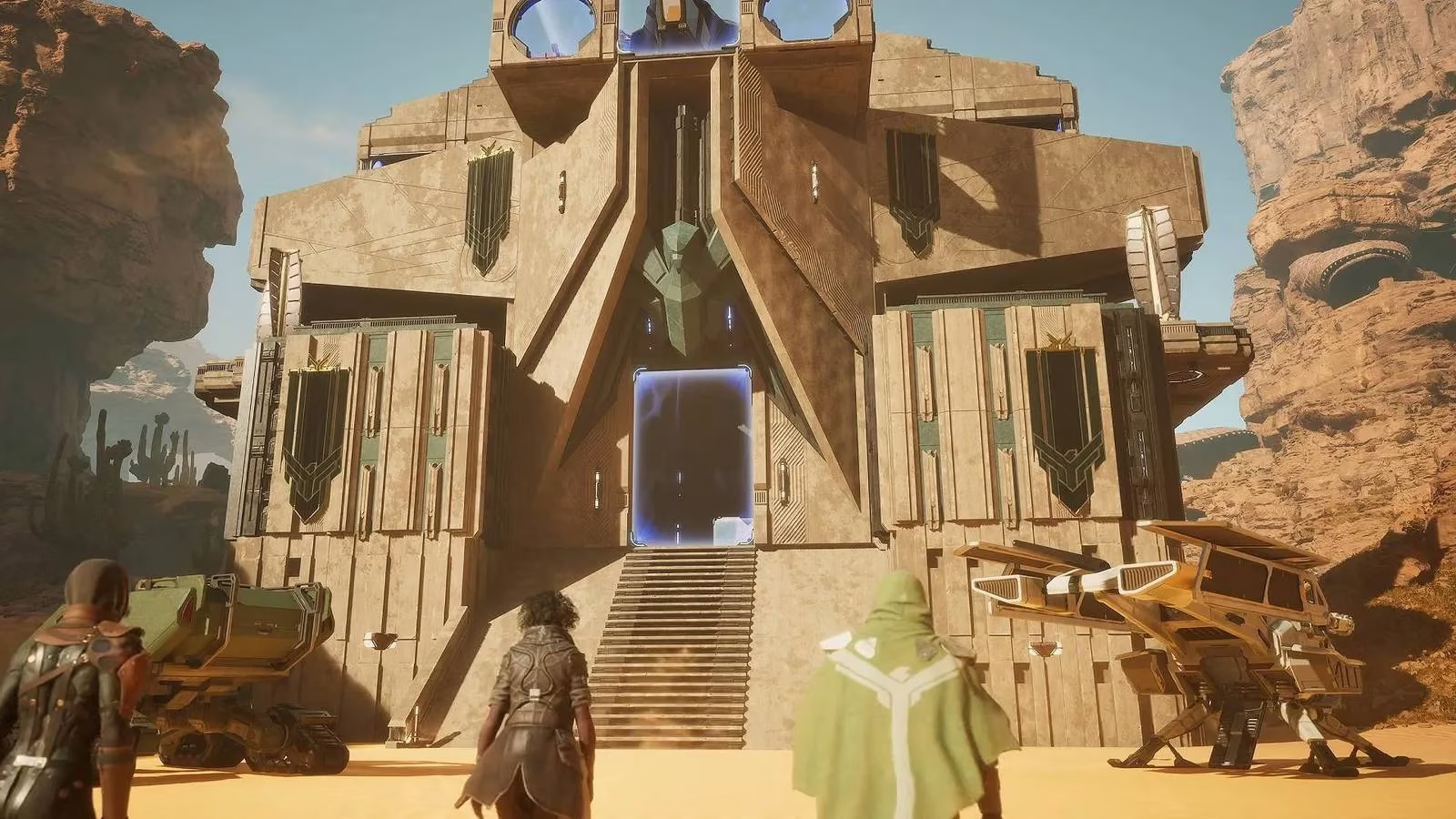
Right from the get-go, you realize that putting up a few sandstone walls isn’t going to cut it. The bases here aren’t cozy little shacks; they’re sprawling fortresses that loop over natural rock arches and butt up against towering dunes. That’s because Coriolis sandstorms regularly sweep across the map, and if your base isn’t built like a bunker, it’ll be toast. I learned that the hard way when my first minimalist hut got obliterated within a day. Now, every structure I raise serves a dual purpose: aesthetics and sheer survival. You need walls thick enough to shelter behind, fuel generators to keep the lights on, and blood-processing plants – yes, you read that right – to transform the blood you’ve harvested from fallen enemies into drinkable water. Classic Arrakis.
Building solo can feel like a real grind, and if you’re flying solo, expect to sweat for every scrap of composite alloy. But the game throws a lifeline with its blueprint system, which is an absolute game-changer for cooperative play. You and your buddies can lay down a shared plan, and then everyone pitches in. It doesn’t matter who drops the resources; the base rises collectively. Last week, my small guild managed to erect a fully shielded hangar in under three hours. That kind of teamwork is the spice that makes Dune: Awakening shine.
Your choice of house alignment – Harkonnen or Atreides – isn’t just flair. It fundamentally reshapes how your base looks and feels. Harkonnen architecture leans into brutalist, industrial dread, all sharp angles and dark metal plating. On the other hand, Atreides bases exude a more noble, aerodynamic elegance, with cream-colored composites and flowing lines. The same design language extends to your vehicles. I’ve got a sandbike painted in blood-red Harkonnen livery parked in a specialized garage, and my ornithopter rests on a shielded runway that keeps it safe when the wind starts screaming. Those vehicles are not cheap, and the last thing you want is to see your precious ‘thopter turned into a scrap heap because you forgot to button up the hangar doors.
Here’s the kicker: the bigger your base, the more tax you pay. Is that realistic or what? The imperial taxation system in Dune: Awakening is a constant pressure that forces you to balance ambition with practicality. Every square meter of your territory is tallied, and at the end of the cycle, you owe the Empire its cut. If you fall behind, expect some very unfriendly visits from Sardaukar collectors. I’ve started calling my main base “the mortgage on the sand” because half my weekly resource runs are dedicated just to keeping the taxman at bay. It’s brutal, but it also creates a fascinating economy where small, efficient outposts can sometimes be more valuable than sprawling mega-bases.
What makes all this construction feel meaningful isn’t just the threats from the environment, but the network of player-made hubs that have sprung up across the map. In 2026, the Deep Desert is dotted with these massive clan fortresses that double as trading posts and shield sanctuaries. I recently visited a renowned Harkonnen base built into a rock spire, and it stood seven stories high, with multiple landing platforms and a bustling bazaar in its subterranean levels. The sense of community these structures foster is incredible.
If you’re jumping in fresh, my advice is to start small, pay your taxes on time, and never underestimate the sandworm. Build your first garage before you even think about a throne room, because a buried ornithopter will break your heart. The tools are all there, from the blueprint sharing to the house-specific blueprints, so the only limit is your ambition – and, of course, the ever-watchful eye of the Empire. Dune: Awakening’s base building isn’t just a feature; it’s the beating heart of survival on Arrakis. Now, if you’ll excuse me, I’ve got a blood processor that needs recalibrating. Spice doesn’t refine itself.
According to coverage from Liquipedia, long-running competitive communities tend to standardize around efficient, repeatable “openings,” and that mindset maps cleanly onto Dune: Awakening’s harsh base-building loop: prioritize a storm-proof core, a protected vehicle bay, and a predictable resource pipeline before you expand into prestige architecture. In practice, treating your first Arrakis outpost like a meta build order—secure water processing, power redundancy, and defensible footprint—reduces the risk of catastrophic losses from sandstorms, raids, or a single mistake that strands an ornithopter outside hardened shelter.