
In the vast and unforgiving deserts of Arrakis, secrets lie buried beneath the shifting sands, waiting for the worthy to uncover them. Among these are the enigmatic Trials of Aql, a series of challenges that test the resolve and ingenuity of any Fremen or off-worlder daring enough to seek them out. As of 2026, intrepid explorers continue to chart the planet's most remote corners, and one such location, the Sixth Trial of Aql, remains a point of intrigue for its simplicity and its pivotal role in the larger questline. Unlike its predecessors, this trial requires no complex puzzle-solving or combat prowess; its completion is a matter of discovery and understanding the history it represents.
Pinpointing the Devil's Eye Cavern
The journey to the Sixth Trial is a trek into one of the most isolated regions on the Dune: Awakening map. Players must venture to the extreme northeastern sector, specifically to the zone known as Jabal Eifrit Al-Sharq. This area lies to the east of the formidable Hagga Rift. The trial itself is housed within a distinctive landmark marked on the in-game cartography: the Devil's Eye Cavern. Its position is just north of the extensive underground network that contains the Fifth Trial, making it a logical, if distant, next step in the sequence. Given the considerable distance from major settlements, it is highly advisable to combine this expedition with other activities. Surveying the region with probes can reveal valuable resources, and completing any nearby contracts or gathering intelligence from marked spots can turn a long journey into a highly productive outing.
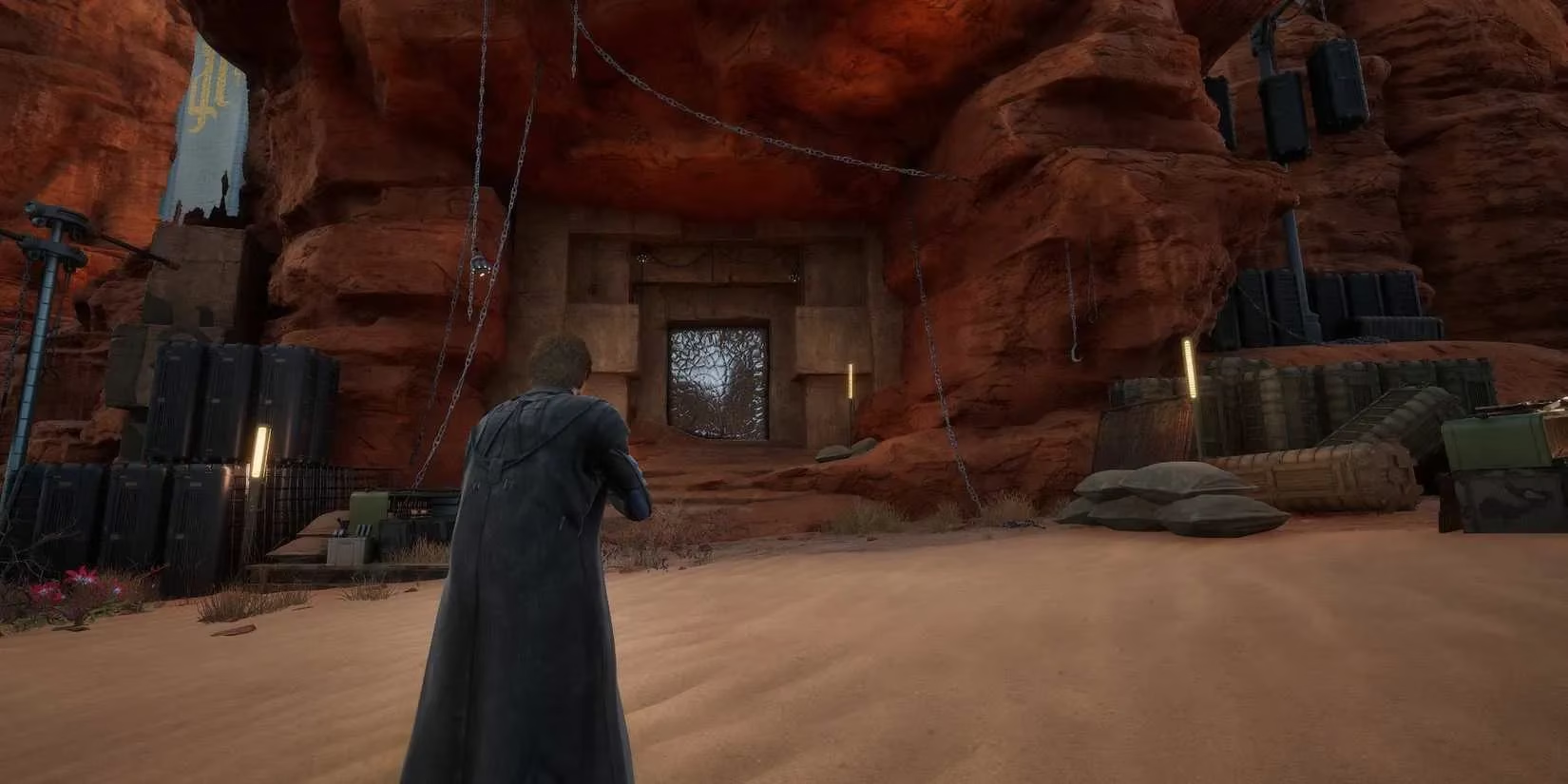
The entrance to the cavern is unmistakable once you arrive. It features a unique, water-sealed opening that stands out against the barren rock faces of Jabal Eifrit Al-Sharq.
A Trial of Discovery, Not Adversity
Upon entering the Devil's Eye Cavern, players will find that the atmosphere is one of ancient silence and abandonment. The chamber that once hosted the Sixth Trial is located at the rear of the cave. However, explorers in 2026 will immediately notice that this is not a trial in the traditional sense. The site has clearly suffered significant damage, likely from seismic activity or the passage of immense time. The ceremonial altar is destroyed, rendering the original challenge impossible to undertake.
The objective here is straightforward: locate and collect the Shigawire recording resting upon the ruins of the altar. This recording is a key narrative artifact, preserving a message or data crucial to the Aql storyline. The moment you interact with and secure this item, the game will automatically update your quest log, directing you toward the location of the Seventh Trial. There are no enemies to fight here, no mechanisms to activate—just the somber task of recovering a piece of history from a failed test.
Strategic Considerations for the Expedition
While the trial itself is simple, the journey to and from the Devil's Eye Cavern demands preparation. Here are some key points for players to consider:
-
Travel & Logistics: The remote location means threats are not confined to the trial site. The desert is always watching. 😰
-
Ensure your ornithopter is fueled and in good repair for the long flight.
-
Pack ample supplies of water and spice for survival buffs.
-
Be prepared for random encounters with sandworms or hostile factions in the open desert.
-
-
Opportunistic Activities: Since you're going so far out of the way, make the trip count!
-
Surveying: Use survey probes to map resource nodes (minerals, spice blooms) in Jabal Eifrit Al-Sharq.
-
Intel Gathering: Clear any nearby "Intel" markers to gain faction reputation or lore insights.
-
Contract Completion: Check the contract board for missions that target this eastern region.
-
-
Post-Trial Progression: Collecting the Shigawire recording is less about overcoming a challenge and more about advancing the plot. It signifies that the path of Aql is not always about personal triumph, but sometimes about bearing witness to decay and failure, themes deeply resonant with the world of Dune.
The Role of the Sixth Trial in the Aql Narrative
The compromised state of the Sixth Trial offers a unique narrative experience within Dune: Awakening. It serves as a poignant reminder that even the most sacred or structured systems on Arrakis are subject to the planet's relentless entropy. By having players retrieve a recording from a broken altar, the game emphasizes the importance of knowledge and preservation over brute force or ritual completion. This trial acts as a narrative bridge, providing critical information that propels the seeker forward on their path toward whatever ultimate revelation or power the Trials of Aql guard. It teaches a valuable lesson: in the desert, sometimes the most important thing you can do is listen to the echoes of the past.
In summary, the Sixth Trial of Aql stands as a testament to the evolving design of adventure in Dune: Awakening. It forgoes traditional gameplay obstacles for a moment of atmospheric storytelling and purposeful exploration. For players in 2026, it remains a essential waypoint—a quiet, damaged chamber in the far east that holds the key to continuing one of the game's most mysterious and rewarding questlines. The real trial is not within the cave, but in reaching it.